}
Last updated: August 18, 2026
Quick Answer: Lab grown meat FDA approved status is real but nuanced. The FDA does not issue a traditional “approval” for cultivated meat products. Instead, it completes a voluntary pre-market consultation and issues a “no further questions” letter when it finds a company’s safety data satisfactory. As of mid-2026, five companies have received FDA clearance, and two, UPSIDE Foods and GOOD Meat, have also cleared USDA inspection, making their cultivated chicken legally saleable in the United States.
Key Takeaways
- The FDA’s pre-market consultation process is not a formal approval, a “no further questions” letter is the regulatory green light for cultivated meat.
- UPSIDE Foods received the world’s first FDA safety clearance for cultivated meat in November 2022 [10].
- GOOD Meat followed with its own FDA clearance in March 2023 [2][4].
- Both companies received USDA grants of inspection in June 2023, enabling the first commercial sales of cultivated chicken in the U.S. [4][5].
- As of mid-2026, five companies hold FDA clearances: UPSIDE Foods, GOOD Meat, Mission Barns, Wildtype, and Believer Meats.
- Cultivated meat is still available only in select restaurants and pilot venues, not mainstream grocery stores.
- Both FDA and USDA-FSIS share regulatory authority over lab-grown meat and poultry products.
- Production cost and scale remain the greatest barriers to broad consumer access.
What Is Lab Grown Meat and How Is It Made
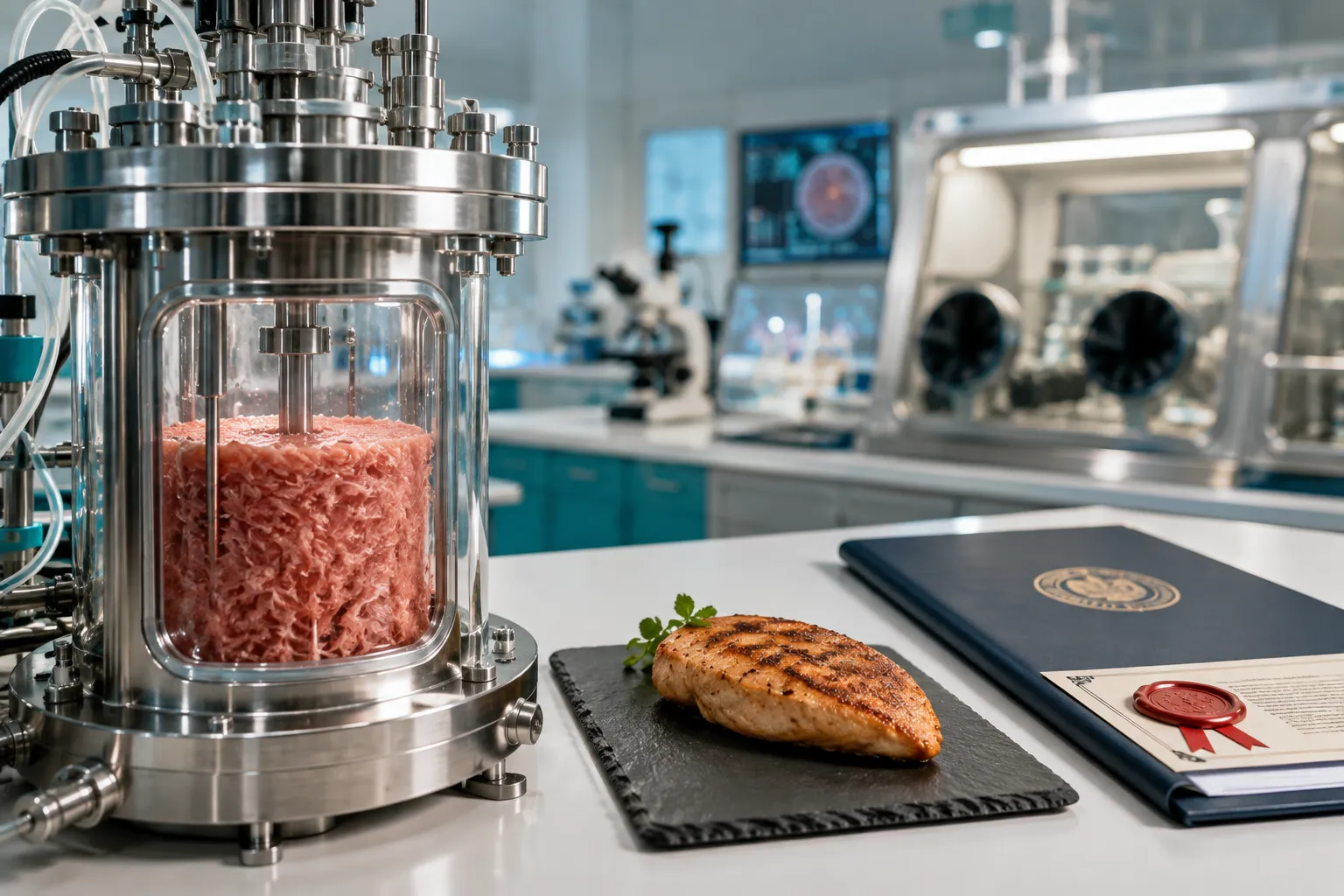
Lab grown meat, also called cultivated meat or cultured meat, is real animal protein grown directly from animal cells in a controlled facility, without slaughtering the animal. The process starts by harvesting a small number of cells from a living animal, then feeding those cells nutrients inside a bioreactor until they multiply and form muscle tissue.
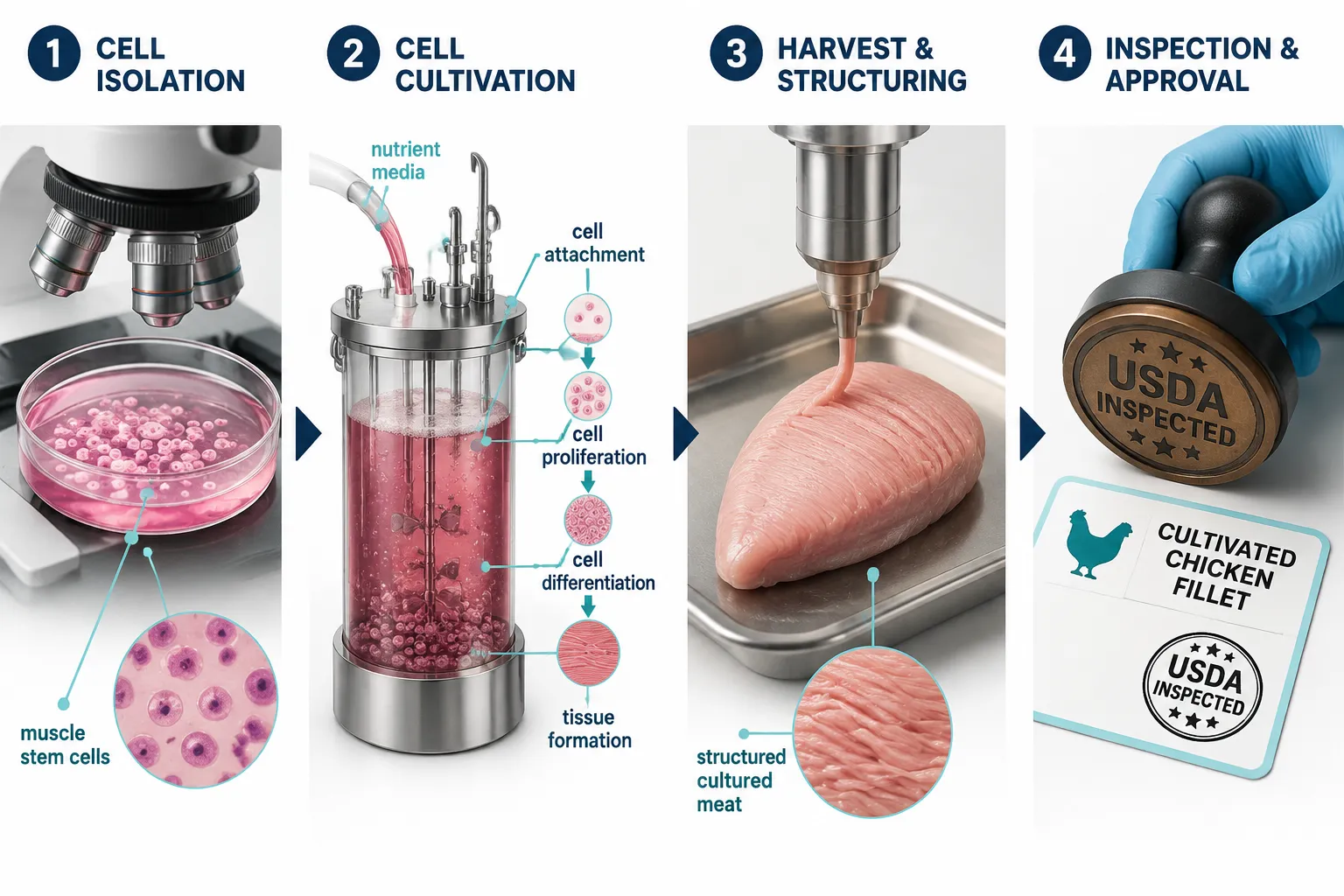
The science behind food made cultured animal cells involves several steps:
- Cell collection, A small biopsy is taken from a donor animal (chicken, cow, salmon, or pig).
- Cell selection, Scientists identify muscle stem cells or satellite cells best suited for proliferation.
- Bioreactor growth, Cells are placed in a bioreactor with a nutrient-rich culture medium. This cell culture technology mimics the conditions inside an animal’s body.
- Scaffolding and structuring, Cells attach to edible scaffolds to form structured cuts like fillets or nuggets.
- Harvest and processing, The finished cultured meat is harvested, processed, and prepared for sale under strict food safety protocols.
The entire process eliminates the need for industrial meat production at a traditional slaughterhouse scale. Researchers at institutions including the Georgia Institute of Technology’s Ivan Allen College of Liberal Arts have studied how the history of animal farming and meat consumption shapes public perception of this technology. The Allen College liberal arts perspective highlights that cultural attitudes built up over decades, not just science, influence whether consumers accept food made cultured cells as “real” meat.
Is Lab Grown Meat Actually Approved by the FDA
The FDA does not use the word “approval” for cultivated meat. Instead, the agency runs a voluntary pre-market consultation process in which a company submits detailed safety data about its human food made from cultured animal cells, and the FDA evaluates whether the safety conclusion is well-supported [6][9].
If satisfied, the FDA issues a “no further questions” letter, effectively a regulatory green light. The FDA itself states clearly that “the voluntary pre-market consultation is not an approval process” [9]. That distinction matters legally and commercially, but in practical terms the letter signals that the FDA has reviewed the food safety data and found no outstanding concerns before the product moves to USDA-FSIS oversight.
The two-agency system for lab-grown meat:
| Agency | Role |
|---|---|
| FDA | Pre-market safety consultation for cultured animal cells; issues “no further questions” letter |
| USDA-FSIS | Grants inspection authority; approves labels; applies mark of inspection before sale |
Both FDA and USDA-FSIS must sign off before any cultivated meat or poultry product can legally enter the U.S. market [6][7]. The FDA regulates the cell collection and growth stages, while USDA-FSIS oversees the harvest, processing, and labeling of meat poultry products.
What Companies Have FDA Approval for Cultured Meat
As of mid-2026, five companies have completed the FDA pre-market consultation process and received clearance for their cultured animal cells-based food products.
- UPSIDE Foods, Received the first-ever FDA “no further questions” letter for cultivated chicken on November 16, 2022 [10][1]. This was described globally as the first time a cultivated meat company received FDA clearance anywhere in the world.
- GOOD Meat (division of Eat Just), Received FDA clearance for cultivated chicken in March 2023 [2][4].
- Mission Barns, Cleared for cultivated pork fat.
- Wildtype, Cleared for cultivated salmon, making it the first seafood product to complete the FDA pre-market consultation process.
- Believer Meats, Received FDA clearance in July 2025 and completed USDA review in October 2025, becoming the first foreign-headquartered firm cleared in the U.S. The company operates a 200,000-square-foot facility in North Carolina.
UPSIDE Foods and GOOD Meat remain the only companies to have also received full USDA-FSIS grants of inspection, which occurred in June 2023 [4][5][8]. That dual clearance from both FDA USDA-FSIS is what allowed commercial sales to begin.
Where Can You Buy FDA Approved Lab Grown Meat
Despite FDA and USDA clearances, lab-grown meat is not yet available in grocery stores. As of mid-2026, cultivated chicken from UPSIDE Foods and GOOD Meat is sold only in a small number of chef-driven restaurants and pilot dining experiences [1][3][4].
Products carry mandatory labeling such as “cell-cultivated chicken” or “cell-cultured” to distinguish them from conventional poultry, per USDA-FSIS requirements [4][7]. This labeling requirement reflects the regulatory information consumers need to make informed choices about the food they eat.
Why isn’t it in supermarkets yet?
- Production capacity is still limited, bioreactors that can produce food at commercial scale are expensive to build and operate.
- Cost per pound remains far above conventional meat (see next section).
- USDA-FSIS inspection requirements mean each production facility must be individually approved before products leave that location.
- Public information about production timelines suggests broad retail availability is still several years away.
Lab Grown Meat vs Traditional Meat: Cost, Nutrition, and Safety
Lab grown meat costs significantly more than conventional animal meat today, though prices have dropped sharply since the first cultured beef burger cost an estimated $330,000 to produce in 2013. Current production costs for cultivated chicken are estimated in the range of tens of dollars per pound at pilot scale, compared to roughly $3-5 per pound for conventional chicken at retail, a gap that remains a central challenge for the industry [4][6].
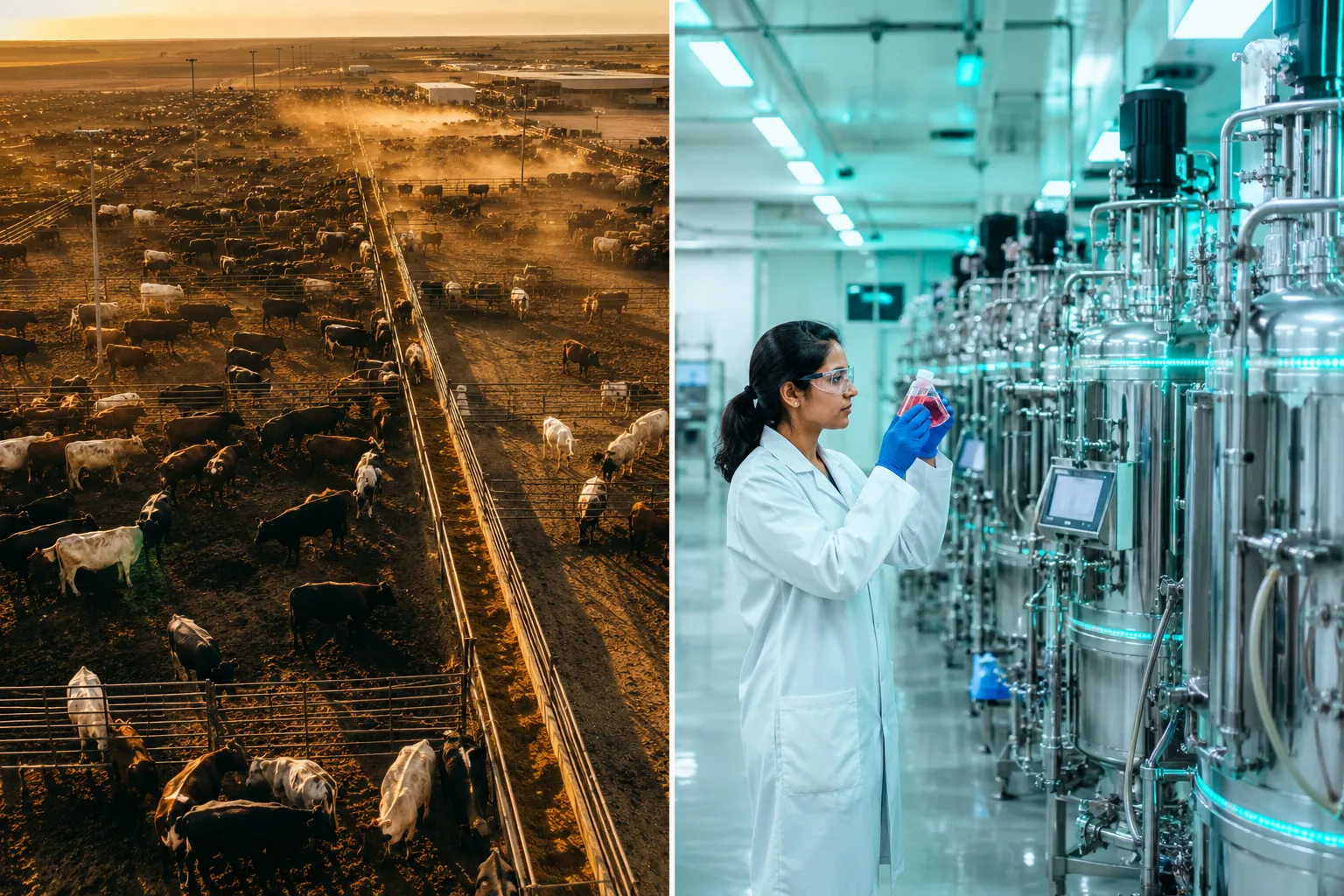
Nutritional profile: Human food made from cultured animal cells is nutritionally similar to conventional meat because it is real animal protein, the same amino acids, fats, and micronutrients found in traditionally farmed meat. Some researchers note that the nutrient composition can be fine-tuned during the cell culture technology process, potentially reducing saturated fat or adding omega-3s, though these modifications are not yet standard in commercial products.
Is lab grown meat safe to eat? The FDA’s pre-market consultation process is specifically designed to evaluate food safety before any product reaches consumers. The agency reviews data on the animal cells used, the culture media, any additives, and the final food product. No serious safety concerns have been identified in the products that have completed the consultation process [6][9]. Allergen information is an open area of research, people with meat allergies should consult a healthcare provider before consuming cultivated products, as the protein profiles are chemically equivalent to conventional meat.
Can lab grown meat go bad or expire? Yes. Cultured meat is real food made from animal protein and will spoil under the same conditions as conventional meat. It requires refrigeration, has a comparable shelf life to fresh conventional chicken or beef, and must be cooked to safe internal temperatures.
Does lab grown meat taste the same as real meat? Early reviews of UPSIDE Foods and GOOD Meat products from chefs and food journalists describe the taste and texture as closely resembling conventional chicken, though structured whole-muscle cuts remain harder to replicate than ground or minced formats [1][3].
Lab Grown Meat Environmental Impact vs Conventional Farming
Cultivated meat is widely cited as having a lower land use and water footprint than industrial meat production, but the full environmental picture is more complex. A University of California Davis study and other analyses note that the energy demands of running large-scale bioreactors, especially if powered by fossil fuels, could result in greenhouse gas emissions comparable to or exceeding those of conventional beef over long time horizons [6].
Key environmental comparisons:
- Land use: Dramatically lower, no pasture or feed crop acreage needed at scale.
- Water use: Lower than beef production, roughly comparable to poultry.
- Energy use: Potentially higher than conventional meat, depending on the electricity source.
- Antibiotic use: Eliminated, cultured animal cells do not require antibiotics, which is a meaningful public health benefit.
Experts studying scaling down rather than scaling up food production argue that smaller, distributed food systems may strengthen food security more reliably than any single technology. The debate about whether lab-grown meat represents the end of factory farming or a decades-long transition is ongoing among food policy researchers, with most projecting that conventional meat will dominate grocery shelves and fast food menus for at least another 20-30 years.
Common Misconceptions About Lab Grown Meat
Several persistent myths circulate about lab grown meat FDA approved products. Addressing them directly helps consumers make informed decisions.
Misconception 1: “The FDA approved lab grown meat as safe.” The FDA completed a voluntary pre-market consultation, it did not issue a formal approval. The agency explicitly states the consultation is not an approval process [9].
Misconception 2: “Lab grown meat is genetically modified.” Standard cultivated meat uses unmodified animal cells. Some companies use genetic modifications in certain cell lines, but this is not universal and would trigger separate regulatory requirements.
Misconception 3: “It’s already in fast food.” No major fast food chain, including Taco Bell, McDonald’s, or others, currently sells lab-grown meat products in the United States as of 2026. Availability remains limited to select fine-dining venues.
Misconception 4: “It’s vegan.” Lab grown meat is made from cultured animal cells. It is not vegan or vegetarian.
Misconception 5: “Any company can sell it now.” Only companies that have completed both the FDA pre-market consultation and received a USDA-FSIS grant of inspection may sell cultivated meat products in the U.S. [6][7].
The Regulatory Approach for Human Food Made from Cultured Animal Cells in the U.S.
The U.S. regulatory framework for human food made from cultured animal cells is a shared jurisdiction model between the FDA and USDA-FSIS, established through a formal agreement between the two agencies [6][7]. This framework applies to meat, poultry, and seafood products derived from animal cell culture.
The pre-market consultation process works as follows:
- A company voluntarily submits a safety dossier to the FDA covering its production process, cell lines, culture media, and final food product.
- The FDA reviews the submission and may request additional information over a period that typically spans many months or years.
- If the FDA finds the company’s safety conclusion well-supported, it issues a “no further questions” letter, completing the pre-market consultation process [9][6].
- The company then works with USDA-FSIS for facility inspection, label approval, and the grant of inspection required before any meat poultry products can be sold.
- USDA-FSIS applies its mark of inspection to approved products, signaling compliance with federal food safety requirements [5][8].
Imports of human food made from cultured animal cells face additional requirements. Foreign facilities producing cultivated meat for the U.S. market must meet equivalent food safety standards and are subject to FDA and USDA-FSIS oversight, just as conventional meat importers are. Believer Meats’ North Carolina facility, despite the company’s Israeli origins, operates under U.S. domestic requirements.
The Congressional Research Service has documented this regulatory framework in detail, noting that the division of responsibilities between FDA and USDA-FSIS reflects the agencies’ existing statutory authorities under the Federal Food, Drug, and Cosmetic Act and the Federal Meat Inspection Act [7].
FAQ
Is Tyson using lab grown meat?
Tyson Foods previously held an investment stake in UPSIDE Foods but divested that position. As of 2026, Tyson does not sell lab-grown meat products under its own brand in the United States. The company has publicly explored cell culture technology but has not announced a commercial cultivated meat product launch. No FDA-cleared lab-grown meat is currently marketed under the Tyson brand.
What 7 states have banned lab grown meat?
As of mid-2026, Florida was the first and most prominent state to enact a ban on the sale of lab-grown meat, signed into law in 2024. Alabama also passed similar legislation. Several other states introduced bills restricting cultivated meat sales, but the number of states with enacted bans fluctuates as legislation moves through state legislatures. Consumers should check current state law, as this regulatory landscape continues to change.
What brands use lab grown meat in the USA?
In the United States, UPSIDE Foods and GOOD Meat (a division of Eat Just) are the only brands that have received both FDA pre-market consultation clearance and USDA-FSIS grants of inspection, allowing them to sell cultivated chicken commercially. Their products are available in a small number of restaurants, not retail stores. No major national food brand currently sells lab-grown meat products at scale in the U.S. as of 2026.
Why did the FDA approve lab grown meat?
The FDA did not issue a formal “approval”, it completed a voluntary pre-market consultation and concluded it had “no further questions” about the safety of cultivated chicken submitted by UPSIDE Foods and GOOD Meat. The agency’s role is to evaluate whether the food made from cultured animal cells is safe for human consumption before it reaches the market. The FDA determined that the production processes and final products reviewed posed no identified safety concerns [9][6].
Conclusion
Lab grown meat FDA approved status represents a genuine regulatory milestone, but the full story is more layered than a simple green light. The FDA’s voluntary pre-market consultation process, not a formal approval, has cleared five companies as of mid-2026, with UPSIDE Foods and GOOD Meat the only ones also holding USDA-FSIS inspection authority needed for actual sales. Cultivated chicken is now legally saleable in the United States, but production scale and cost keep it out of mainstream grocery stores for now.
Actionable next steps for different audiences:
- Consumers curious about lab-grown meat: Look for “cell-cultivated chicken” on menus at upscale restaurants in major cities. Read labels carefully, USDA-FSIS requires clear disclosure on all cultured meat products.
- Food industry professionals: Follow FDA announcements, meetings, and webinars on the agency’s cultured animal cells inventory page for updates on new pre-market consultations and regulatory guidance.
- Investors and entrepreneurs: Review the Congressional Research Service report [7] and UC Davis federal regulation resource [6] for a thorough overview of the regulatory requirements before entering this market.
- Policy watchers: Track state-level legislation alongside federal FDA USDA-FSIS developments, as the patchwork of state bans creates a complex compliance environment that will shape the industry’s near-term trajectory.
The science of making food with cultured animal cells is advancing faster than the economics. The regulatory framework is in place. The next few years will determine whether lab-grown meat moves from chef’s tables to supermarket shelves, or remains a compelling proof of concept while conventional meat production continues to dominate.
References
[1] Story – https://abcnews.com/GMA/Food/fda-approves-1st-cell-cultivated-meat-upside-foods/story?id=100278334
[2] Detail – https://www.lexology.com/library/detail.aspx?g=0af4d448-55f2-4e7e-9a64-3fe8830fbbb1
[3] Fda Approves 1st Cell Cultivated Meat Upside Foods – https://abcnews.com/food/story/fda-approves-1st-cell-cultivated-meat-upside-foods/?id=100278334
[4] fooddive – https://www.fooddive.com/news/us-approves-cultivated-meat-eat-just-upside-foods/653509/
[5] Upside Foods Says Receives Label Approval Usda Its Cultivated Meat 2023 06 14 – https://www.reuters.com/business/upside-foods-says-receives-label-approval-usda-its-cultivated-meat-2023-06-14/
[6] Federal Regulation – https://cultivatedmeat.ucdavis.edu/federal-regulation
[7] R47697 – https://www.congress.gov/crs-product/R47697
[8] Upside Is Approved For Sale In The Us Heres What You Need To Know – https://www.upsidefoods.com/blog/upside-is-approved-for-sale-in-the-us-heres-what-you-need-to-know
[9] The Upshot How Do The Fda And Usda Regulate Cultivated Meat – https://upsidefoods.com/blog/the-upshot-how-do-the-fda-and-usda-regulate-cultivated-meat/
[10] Upside Foods Gets Worlds First Fda Approval For Cultivated Meat In The Us – https://agfundernews.com/upside-foods-gets-worlds-first-fda-approval-for-cultivated-meat-in-the-us
Leave a Reply